Boomplastic: Płyty i produkty wykonane w 100% z recyklingu /// Sheets and products made of 100% recycled material

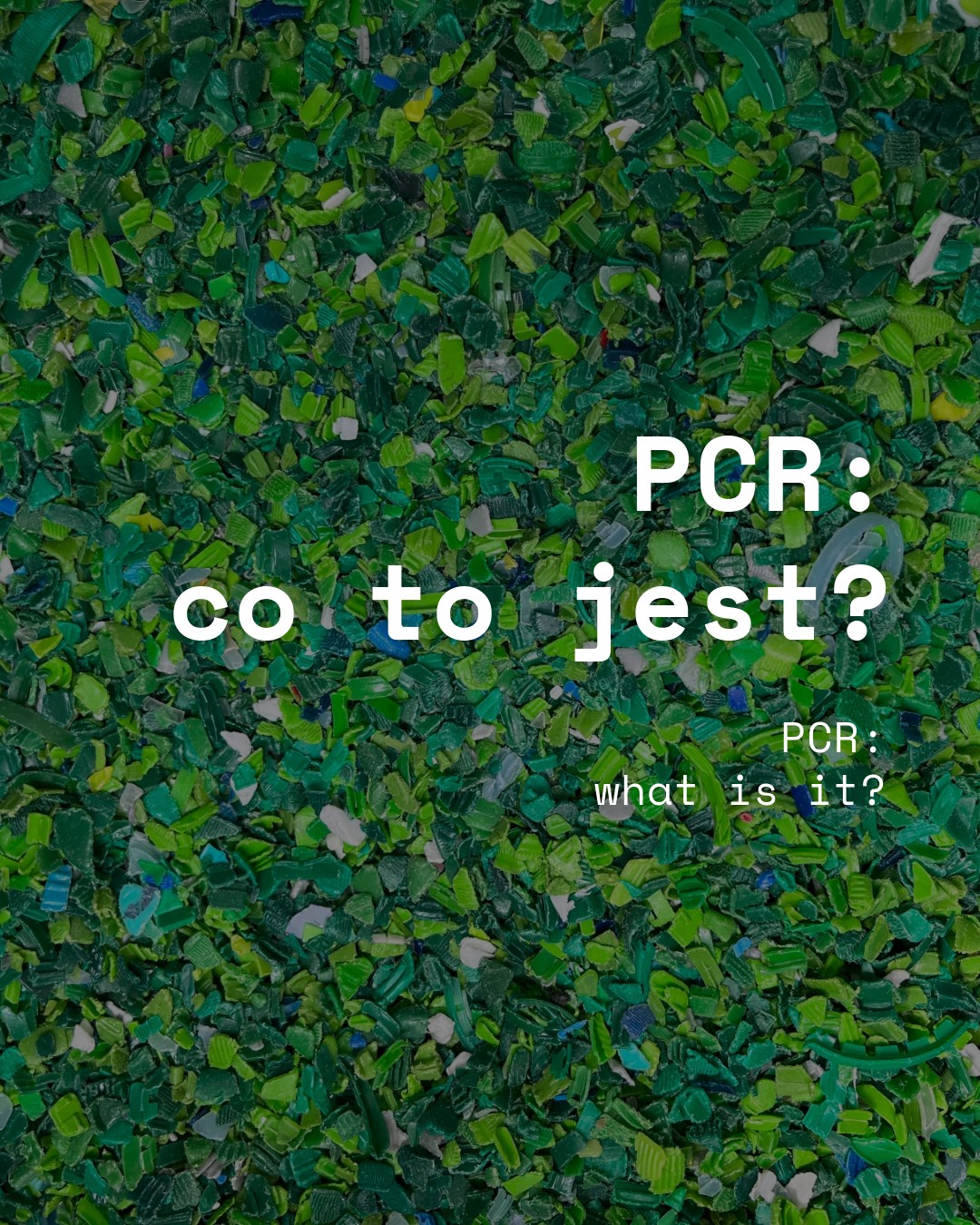
PCR-what is it?

Have you ever wondered what happens to the plastic waste you throw into your plastic waste bin?

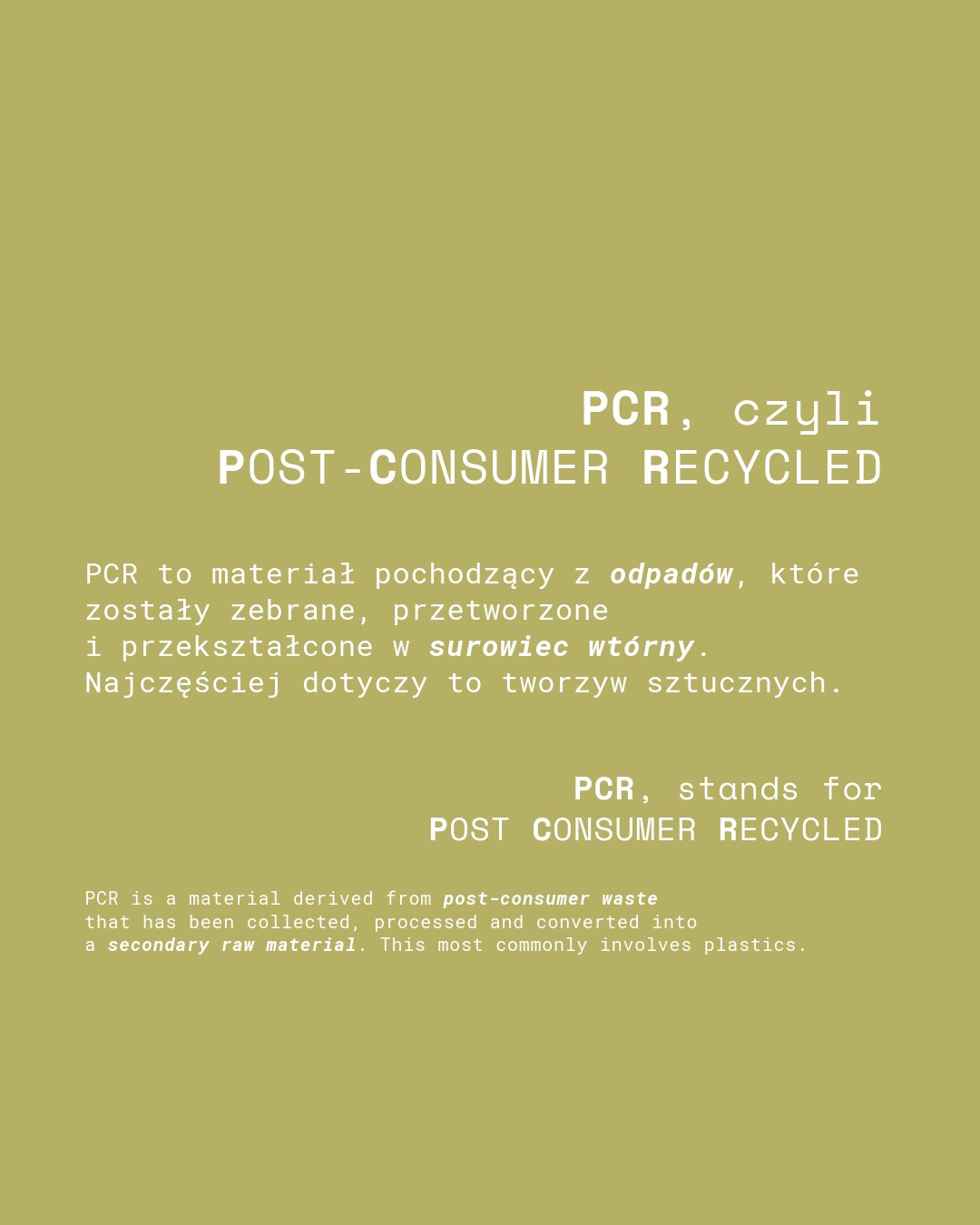
Some of it ends up being recycled and turned into something new! One of the effects of this process is PCR, or Post-Consumer Recycled – material from post-consumer waste that has been collected, processed and transformed into a secondary raw material. This most often concerns plastics (such as PET or HDPE), but can also include other materials such as paper or glass.

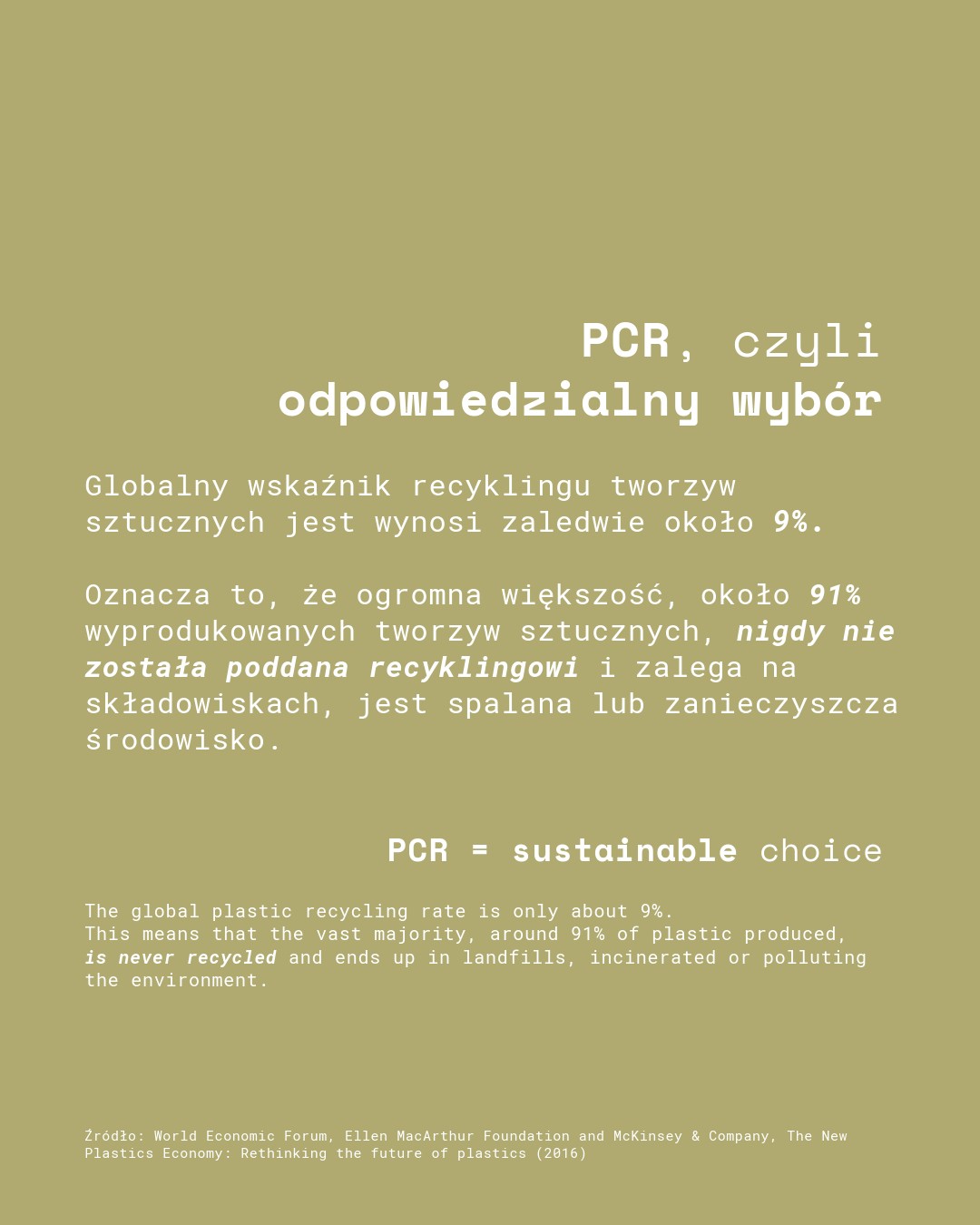
While this sounds promising, the reality of plastic recycling is not so optimistic. The global recycling rate is only around 9%. This means that the vast majority, as much as 91% of plastic produced, has never been recycled – it ends up in landfills, is incinerated or pollutes the environment. It is worth noting that plastic production itself has increased dramatically – from 15 million tonnes in 1964 to 311 million tonnes in 2014, and forecasts indicate that this number will double again over the next two decades.

In the face of such a scale of the problem, not only systemic and technological actions are important, but also our daily choices – from waste segregation to conscious shopping and supporting recycling-based solutions such as PCR.

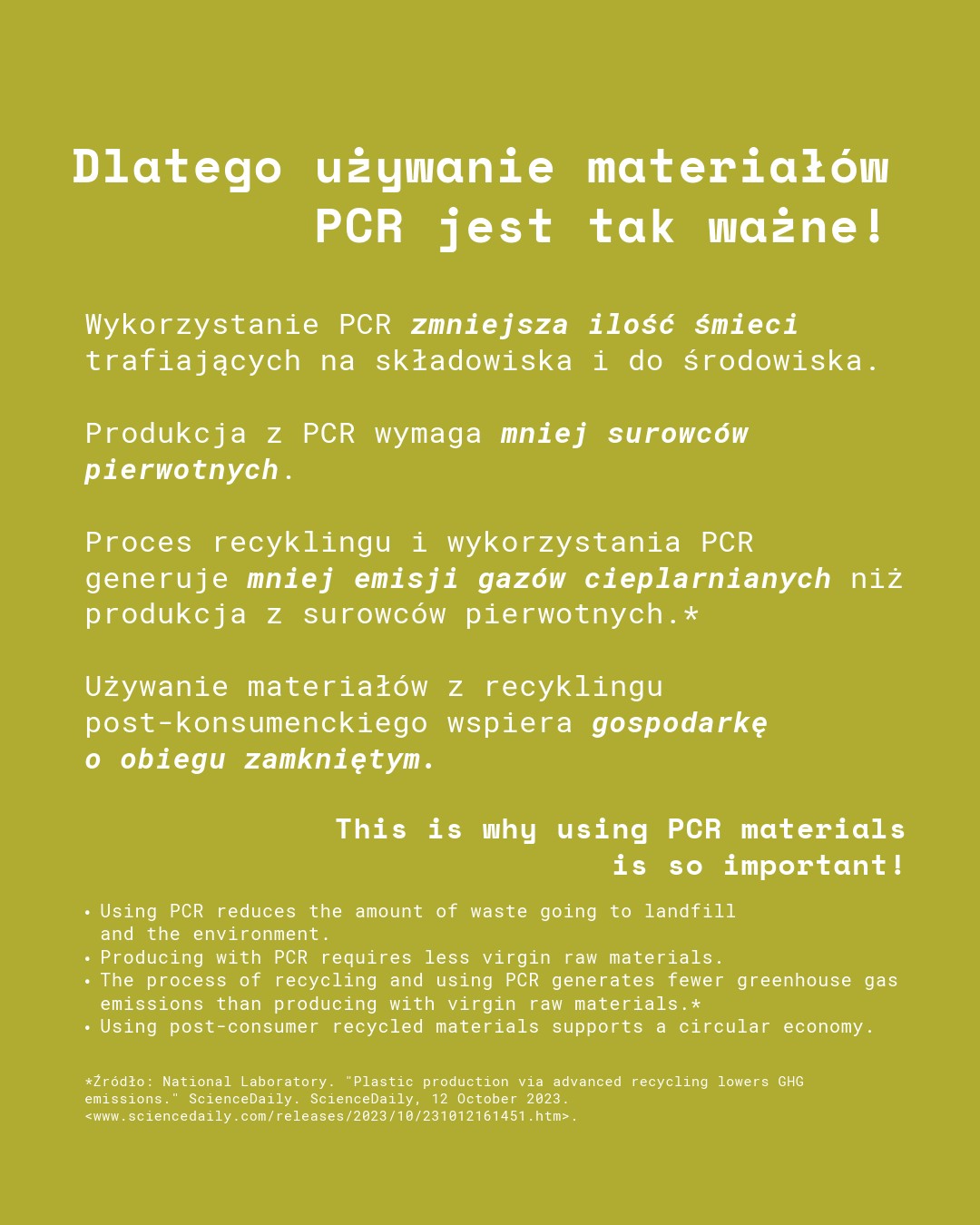
Why is PCR so important?

  • Reduces waste: Using PCR reduces the amount of waste ending up in landfills and in the environment.
  • Saves natural resources: Production with PCR requires less primary raw materials (e.g. crude oil in the case of plastic).
  • Reduces carbon footprint: The process of recycling and using PCR often generates less greenhouse gas emissions than production from primary raw materials.**
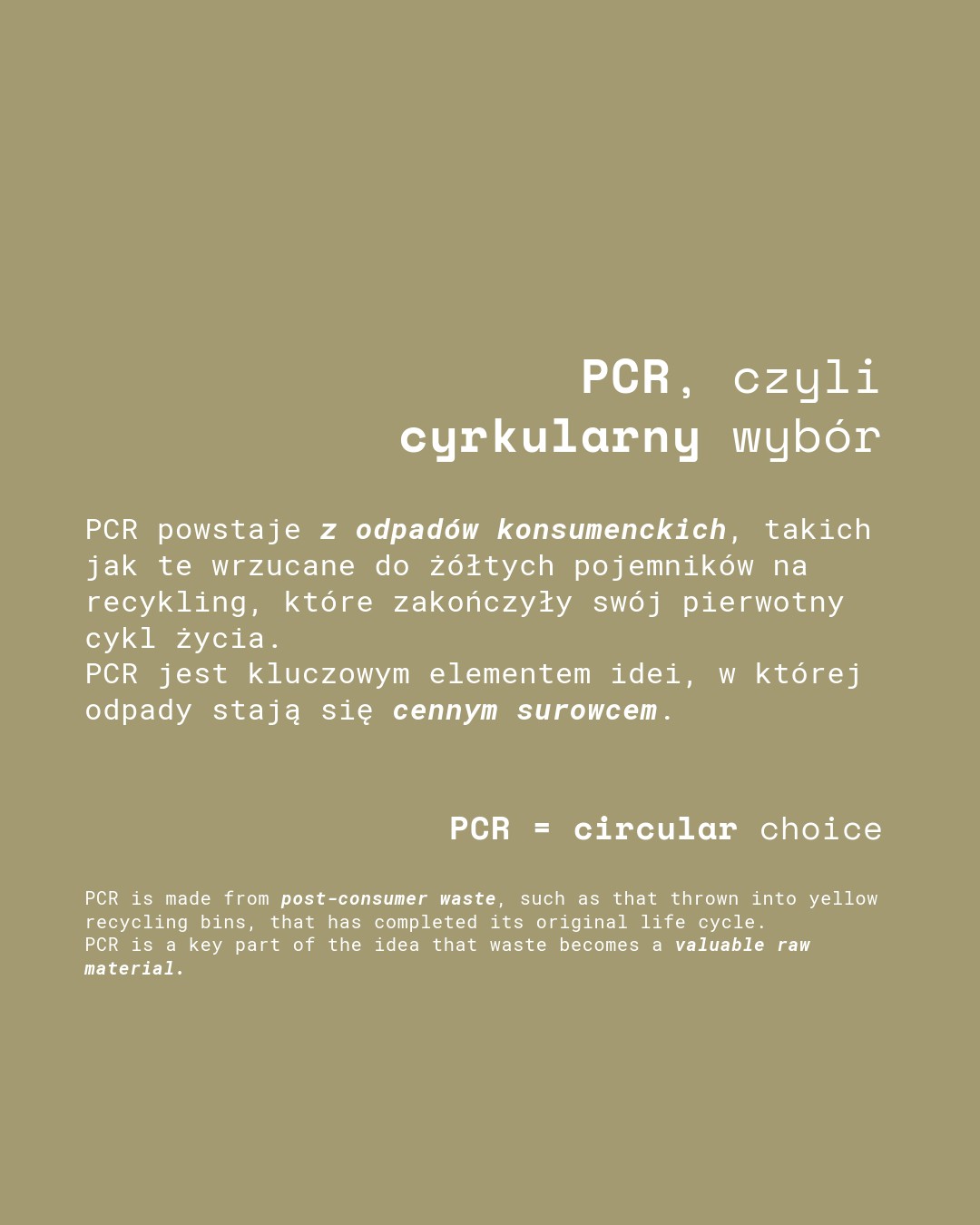
  • Supports a circular economy: PCR is a key element of the idea in which waste becomes a valuable raw material.


In recent years, there has been a dynamic increase in interest in products advertised as sustainable – their sales are growing 2.7 times faster than sales of products promoted in a conventional way.*** This shows the growing awareness of consumers and their willingness to make purchasing decisions based on values related to environmental protection. Unfortunately, the popularity of slogans suggesting an ecological approach means that they are often used instrumentally, without any real reflection in the actions of companies. These practices, referred to as greenwashing, mislead consumers and weaken trust in real pro-ecological initiatives.

Sources:

*World Economic Forum, Ellen MacArthur Foundation and McKinsey & Company, The New Plastics Economy: Rethinking the future of plastics (2016)
**National Laboratory. “Plastic production via advanced recycling lowers GHG emissions.” ScienceDaily. ScienceDaily, 12 October 2023
***Sustainable Market Share Index™, Randi Kronthal-Sacco Tensie Whelan Updated: April 2023, NYU Stern 

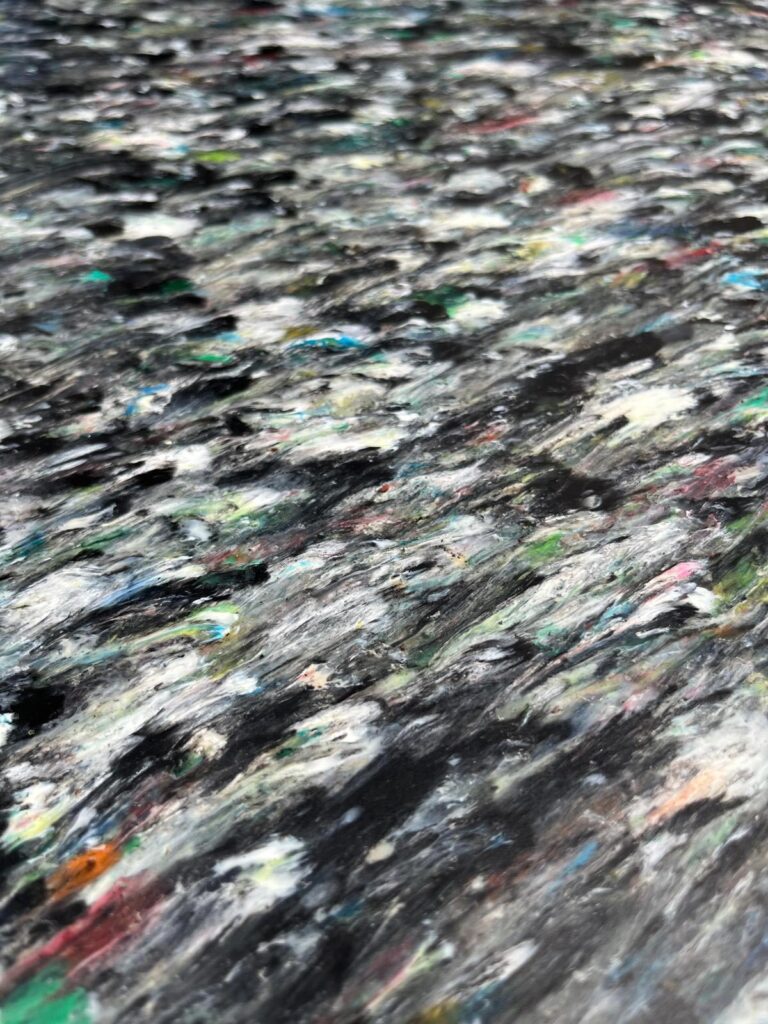
SUPERMIX sheets

Created from a mixture of various, unsorted color regrinds – they surprise with unique visual effects!

Więcej